The technology is there. The journey isn’t.
Automotive retail has invested heavily in digital technology. But has it actually made the customer experience better?
We recently mystery-shopped six automotive retailers to find out.
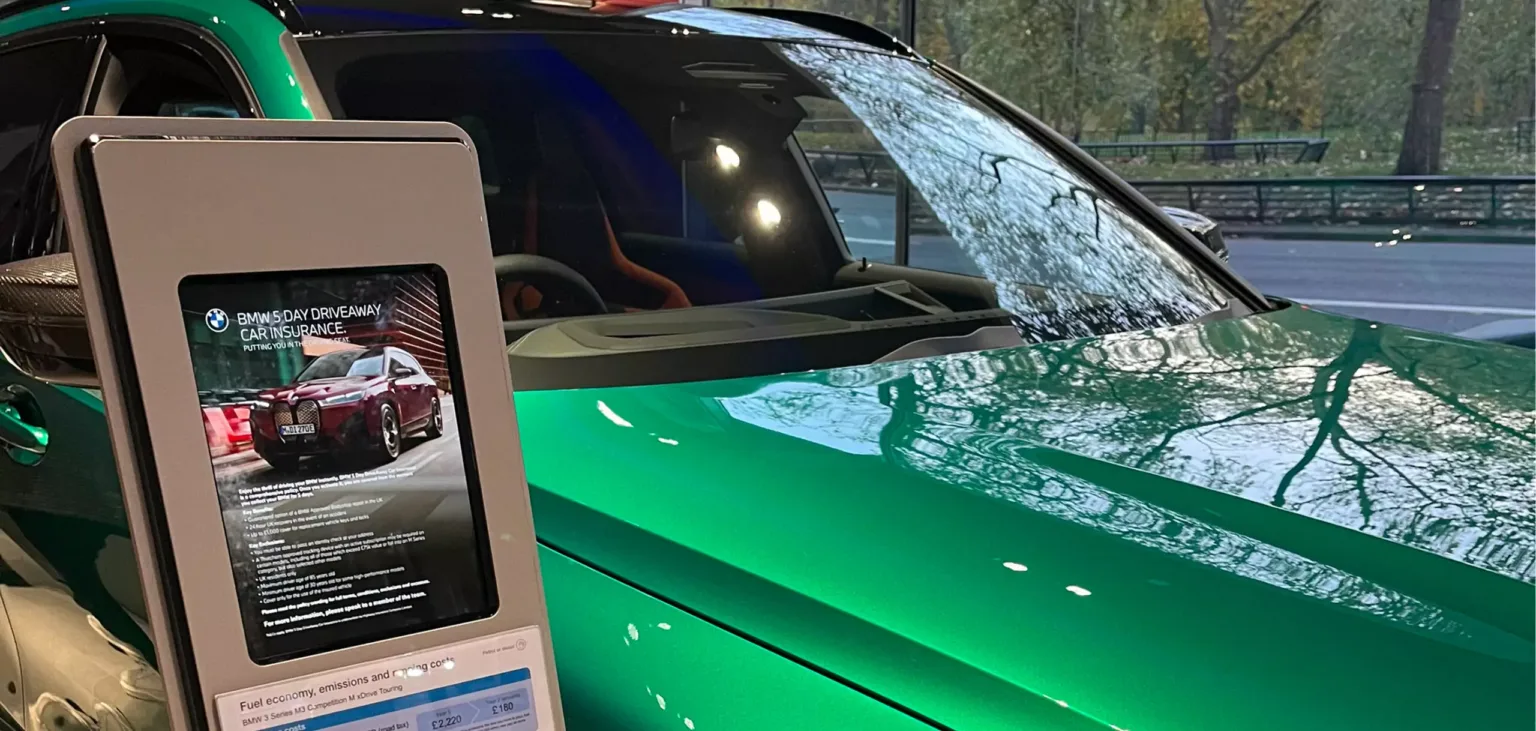
Across our visits, there was no shortage of technology. Car Configurators, stock finders, finance systems, digital tablets, QR codes and large touchscreens are all part of the modern showroom.
What was harder to find was a genuinely connected customer experience.
And perhaps most revealingly, the biggest gap wasn’t what happened inside the showroom. It was what happened when we left. And for ‘gap’ read ‘missed sales’.
Good salespeople still make the difference
Despite all the technology available, the best experiences came down to good salespeople doing the fundamentals brilliantly.
Asking the right questions. Understanding what mattered to the customer. Recommending the right car. Explaining why it was the right choice.
Volvo stood out for confident product knowledge and a natural vehicle walkaround. MG understood our needs and used finance intelligently to strengthen its recommendation.
In both cases, it was the salesperson, backed up by the right tools but not dominated by them, who made the experience work.
Elsewhere, needs discovery was limited. Customers were sometimes left to explore alone, while digital tools were underused or simply directed people back to the manufacturer’s website.
Technology was available, but it wasn’t consistently helping to create a better conversation.
And that raises an important question. If so much of the experience depends on the individual salesperson, how can brands make that quality of experience more consistent across an entire retail network?
The biggest gap came after we left the showroom
Perhaps the most revealing finding was what happened at the end of our visits.
In several cases, we walked away without a personalised quote, saved vehicle configuration or useful digital content to refer back to. Sometimes our contact details weren’t even captured. Borderline criminal in a sales environment.
The conversation simply stopped.
Think about that from the customer’s perspective.
You’ve taken a trip to the showroom (something many people don’t think of as a fun day out), spent time exploring a vehicle, discussing your needs and potentially considering one of the biggest purchases you’ll make.
Then you leave with little to help you remember, compare or move closer to a decision. Nothing physical, digital or even the name of a salesperson.
For automotive brands, that’s a missed opportunity to turn showroom interest into an ongoing relationship. A sale.
And with automotive brand loyalty facing new pressures, keeping that conversation going matters more than ever.
Automotive retail has digitised the showroom without necessarily redesigning the experience
This is the bigger issue.
The automotive industry has introduced more digital tools into retail, but our visits suggest those tools aren’t always connected around the customer.
A configurator can help someone build a car. A finance system can calculate affordability. A product screen can demonstrate features.
But are those experiences working together? Are they helping salespeople understand individual needs, make relevant recommendations and keep the conversation going?
The opportunity isn’t necessarily to introduce more technology.
It’s to make smarter use of what’s already there.
What should a connected automotive retail experience look like?
At its simplest, the customer journey should follow a few clear steps:
Understand me → Recommend something → Prove why → Show me what it costs → Let me experience it → Give me something useful → Keep the conversation going.
Digital technology has a role to play at every stage.
That might mean better tools to help salespeople discover customer needs, interactive product content that makes complex features easier to understand, or personalised digital materials customers can take away and revisit.
It also means giving retailers the right information, training and content to deliver a consistent experience across the network.
Crucially, none of this replaces the salesperson. It helps them do their job better. It encourages customers to actually visit a showroom because for all we know about this digital age – nothing comes close to selling a car than getting a bum on a driving seat.
Connecting the showroom to the customer journey
At Juice, we work with some of the world’s leading automotive brands to develop digital experiences that support both retailers and customers.
From retailer communication platforms and interactive point-of-sale experiences to digital brochures and product content, our focus is on making information easier to access, understand and use.
It’s about giving salespeople the confidence to sell, and giving customers the information and experience they need to make a decision.
Six mystery shops can’t tell us everything about automotive retail. But they revealed a clear opportunity.
The industry has made impressive progress in bringing digital technology into the showroom.
Now it needs to connect those tools around the people using them.
The technology is there. Now it needs to become an experience.
Toby Hyde, Head of Product, Juice